


Camp at Zaytuna Farm
Camping is available on-site in a self-provided tent or camper. There are 10 camp shelters, hot showers and composting toilets. There is access to basic kitchen facilities and wifi.
Book CampingSam Parker Davies
4 - 15 January 2027
At Zaytuna Farm
About the course
Learn how to design regenerative systems that can provide all our human needs, whilst benefiting our environment.
Permaculture can be applied almost anywhere — from an urban balcony or backyard to a home, farm, community or large-scale restoration project. The principles stay the same, but the way we apply them changes with the landscape, climate, resources and people.
This course teaches you how to work with those differences rather than against them. You’ll learn to read landscapes, understand how systems connect, and use permaculture principles to make informed design decisions.
More than a collection of techniques, permaculture offers a way of seeing the world. It helps you recognise patterns, understand relationships and think beyond individual problems to the wider systems they are part of.

What is included

With Sam Parker-Davies as your main teacher and special guest speakers.

Optional hands on gardening, food forest and animal work each morning between 6am & 8am

You will get the chance to put your new skills to the test and produce a permaculture design.

Upon successful course completion, you will receive your PDC, approved and signed by Sam Parker-Davies.
What you will learn

Grow more of your own food, build healthy soil and design productive systems that make the most of what you have.

Learn to design systems that are diverse, adaptable and less dependent on outside resources.

Open doors to new work: design, consulting, teaching, land management, or building your own regenerative project. Permaculture skills travel across land, business and community.

Grow nutrient-dense food, reconnect with natural systems, and design a life with more movement, fresh air and purpose built into it. Healthy land and healthy people go together.

Learn to work with the conditions around you and create resilient systems that adapt to a changing climate.

Join a community of like-minded people who care about the same things you do. The connections you make on a PDC often last well beyond the two weeks, and many students leave with friendships and collaborators for life.
A PDC is more than learning about permaculture. It changes the way you see the world around you. Learn to read the landscape, notice connections, recognise opportunities and understand how nature creates abundance from what’s already there. Take that perspective home with practical skills you can apply to your food, land, work, health and the way you live.





The course outline
 Download
 Day 1
Challenge what you think you know. Explore permaculture's philosophy, its ethics and its place in landscape and society, and see why designing differently matters now more than ever. You'll also see permaculture at work in case studies from around the world.

Day 2
Learn the principles nature uses to create yield, from cycles to diversity and stability. Then turn them into a design process using observation, zones, sectors and maps. By the end of the day, you'll be ready to start your own design project.

Day 3
Discover the patterns behind everything: spirals, branches, flows and edges. Then learn how global climate works, how to shape microclimates and how to design for natural disasters. Once you see these patterns, you'll start spotting them everywhere.

Day 4
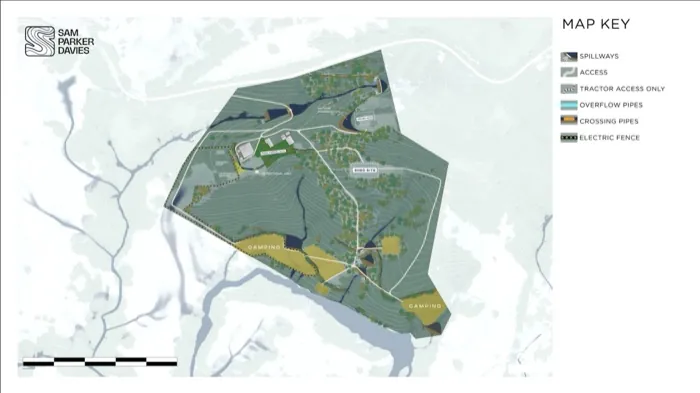
See how trees drive wind, temperature and rainfall, and how food forests are built. Then learn how water moves through landscapes, with a tour of Zaytuna Farm's 25-year-old water system. See firsthand how swales, dams and trees work together to hold water in the landscape.

Day 5
Go deeper into swales, dams, spillways and landscape rehydration, with case studies from Somalia to Jordan. Then dig into the biggest environmental problem of all: soil loss. Learn why it has brought down civilisations, and how to reverse it.

Two day break
Day 6
Build living soil through chemistry, biology and hands-on composting. Then learn to plan, survey and direct earthworks that capture water and work with the land. Plus how to choose the right machinery and plant out once the earth is moved.

Day 7
Design houses, gardens, food forests and animal systems for the tropics, then for cool and cold climates. Two climates, two very different toolkits. Including how to plan homes and villages that stand up to storms, floods and fire.

Day 8
Bust the myths about deserts and learn the strategies that green them. Then explore ponds, reed beds and natural swimming pools, and how water systems feed whole landscapes. You'll also learn how to halt desertification and bring salted soils back to life.

Day 9
Zoom out to the systems that shape society: land access, money and finance, village development, bioregions and ethical investment. Then bring it all together in your own design. This is where permaculture moves beyond the garden and into how we live and work together.

Day 10
Present your design, learn from your classmates' work and map out where you'll take it next. We close with an evening of story sharing and a talent show. You'll leave with a finished design, your certificate and a community to keep growing with.

The location
This PDC is taught at Zaytuna Farm Eco-Hamlet, one of the world's leading permaculture demonstration sites. With 25 years of established earthworks, water harvesting systems, food forests and productive animal systems, the farm is a living classroom where you'll see permaculture working at scale.
Zaytuna Farm is 1km from the village of The Channon and 20km from Lismore in Northern New South Wales, Australia.
In recent years, Zaytuna Farm has become an eco-hamlet, home to a number of residents and their families. Common areas are open for you to explore, while residents' homes and private areas are off limits. We ask that you respect that privacy throughout your stay.
Zaytuna is also a richly diverse community. Many residents have come from different parts of the world, travel regularly, and speak English as a second language. Our students are often just as diverse, so come with an open mind and a curiosity about the people you'll meet.


MOU
The community has agreed guidelines that reflect the values and faith traditions of the people who live here. Some may be unfamiliar to you, but they exist to help everyone feel comfortable and included. We hope you'll see them as a chance to experience a different way of living rather than a restriction.
All students must read, agree to and sign the Zaytuna Farm MOU before enrolling.
Read the MOU
SAVE $200 when you book before 15 Dec 2026 and save even more if you book with your friends.
Accommodation options
There are various accommodation options both at the Zaytuna Farm Eco-Hamlet and surrounding areas.
Please note accommodation is not included in the course fee and will need to be booked separately.
Camping is available on-site in a self-provided tent or camper. There are 10 camp shelters, hot showers and composting toilets. There is access to basic kitchen facilities and wifi.
Book Camping
Wildura is our recommended local permaculture farmstay. Just 10km from Zaytuna Farm, near Nightcap National Park, its cosy private guest room sleeps up to 4 people.
Contact Wildura
Limited private arrangements with Eco-Hamlet residents may be possible. Please email to enquire.
Email UsFood options
Breakfast is self catered. Lunch and dinner can be purchased at the Zaytuna Farm Cafe or the local Channon Tavern & General Store

If you're staying at the Zaytuna Farm campsite, you're welcome to use the camp kitchen to prepare your own meals. Facilities are basic and shared, with limited fridge space, cookware and utensils, so we recommend bringing your own plate, cutlery, cup and an esky if you can.
Book Camping
Fresh lunches and dinners are available Monday to Friday during the course for $30 per meal. During breaks, you can grab a tea or coffee from the café.

The village tavern is open for lunch and dinner Tuesday to Sunday, and the general store serves hot meals and drinks 7 days a week.
More InfoDirections
Zaytuna Farm is located 1 kilometre from the village of The Channon, 20km outside of Lismore in New South Wales, Australia.

Regional: Coolangatta, Byron/Ballina
International: Brisbane

Casino (with bus service on to Lismore)

The Channon
NB: A limited service that runs Mon-Fri
 View on Google Maps

Lectures are broken up with activities, farm tours, guest speakers and hands-on sessions, so you're never just sitting and listening.
This course is mainly theory-based, giving you the knowledge you need before putting it into practice. To build your hands-on skills, Sam also runs practical courses, with discounts for returning students. Check out Sam's course schedule to see what's coming up.
The course follows the curriculum set out by Bill Mollison, the founder of permaculture, in Permaculture: A Designers' Manual, the foundation text of the field. The curriculum has been taught for over 40 years, and here it's delivered by a designer who has applied it on six continents.
We highly recommend getting your own copy of the manual and bringing it to the course. You'll be able to follow along in class, add your own notes, and keep it as a reference for years to come. It's a large book that can take a while to arrive, so order early.
Sam Parker-Davies is a regenerative designer, educator and project manager with more than 10 years' experience. He has completed over 100 projects across six continents. He lives and teaches regularly at Zaytuna Farm Eco-Hamlet, and is the main facilitator for this course.
You'll leave with a finished design, your PDC certificate and a community to keep growing with.
Yes. There's an optional regional tour of historic permaculture sites and current projects, at a cost of $500. Please contact Sam to register your interest and book.
The course is held at the Zaytuna Farm Eco-Hamlet, just outside the village of The Channon in the Northern Rivers region of NSW, Australia. The nearest major town is Lismore, 22km away, and Byron Bay is about 48km away.
Address: 1158 Pinchin Road, The Channon, NSW 2480
By air: The closest airports are Ballina Byron Gateway Airport and Gold Coast Airport. Brisbane Airport is the nearest major international airport.
By train: The nearest train station is Casino, with a connecting coach service to Lismore.
Local transport: Public transport to The Channon is very limited. A school bus runs from Lismore on weekdays during school terms only, so we recommend arranging a taxi from Lismore or car-pooling with other students. Email us if you'd like to be connected with others on your course.
Camping on site: Zaytuna Farm offers camping for course participants, in your own tent, campervan or caravan. Sites are on flat ground close to the Commons, where you'll find the compost toilets, hot showers and the shared camp kitchen. There are also 10 raised, covered camping platforms for tents smaller than 4m x 2.5m. These are first come, first served and not guaranteed, so please check with a member of staff before setting up.
We don't provide tents or camping equipment, so please come prepared for the season. We recommend a good waterproof tent, an air mattress, a sleeping bag, blankets, a pillow, a head torch and a tarp for shade. Camping can be booked via Hipcamp.
Nearby farmstay: If you'd prefer a room, we recommend Wildura, a permaculture farmstay about 10km from Zaytuna Farm on the edge of Nightcap National Park. Its cosy private guest room sleeps up to 4, and staying there lets you experience a second working permaculture farm. Book your stay at Wildura
Informal resident stays: Limited private arrangements with Eco Hamlet residents may occasionally be possible. These are made directly between you and the resident. Email us if you'd like us to pass on your enquiry.
Course meals: Lunch and dinner are available to purchase Monday to Friday during the course, at $30 per meal. Breakfast and weekend meals are self-catered, so please plan and bring supplies for these. During breaks, you can buy tea and coffee from the café.
Cooking your own: If you're camping at Zaytuna Farm, you're welcome to use the camp kitchen to prepare your own meals. Facilities are basic and shared, with limited fridge space, cookware and utensils, so we recommend bringing your own plate, cutlery, cup and an esky if you can. Please don't bring electric kettles or toasters, as the farm runs on solar power.
We recommend bringing supplies with you, especially if you don't have a car. The local store stocks most basics but is more expensive than supermarkets in Lismore.
Eating out in The Channon: The village tavern serves lunch and dinner Tuesday to Sunday, and the general store sells hot meals and drinks 7 days a week. If your course runs over the second Sunday of the month, The Channon Craft Market also has plenty of food stalls.
Yes. Please park in the designated car park and follow the signs.
If you're camping during a course, campervans can be parked in the camping area. If you're bringing a caravan, please return your vehicle to the main car park once you've set up. In wet or muddy weather, please avoid driving onto the camping area.
Facilities include clean compost toilets, solar-heated hot showers with gas backup, a coin-operated washing machine, a laptop workstation, a small library and a shared camp kitchen with a fridge.
Filtered rainwater is available from the marked taps in the dining area and camp kitchen. All other taps in the Commons and bathrooms supply unfiltered rainwater. Taps not attached to a building carry dam water for irrigation and are not safe to drink.
Wi-Fi is available from 6pm to 9pm for emails, research, browsing and video calls. Please don't use it for streaming or large downloads, as bandwidth is limited. Internet isn't available in the classroom or eating area, except during exercises that need it.
We recommend bringing a laptop, as students often share files during the course.
Reception at the farm is weak for most providers, with Telstra being the most reliable. You can usually get better reception a short walk up the road.
There is a laundromat with washers and dryers at the General Store in The Channon, at $4 per wash.
Camping gear: If you're staying on site, bring a good waterproof tent, an air mattress or sleeping mat, a sleeping bag, blankets, a pillow and a tarp for shade and rain. A head torch is essential, as there's no outdoor lighting in the campground.
Kitchen essentials: Bring your own plate, bowl, cutlery and cup, an esky (as fridge space is limited), and supplies for breakfast and weekend meals. Please leave electric kettles and toasters at home, as the farm runs on solar power.
Clothing: Pack modest clothing that covers shoulders and knees, in line with our community guidelines. Summers are hot and humid with heavy rain, while winter mornings can be frosty, so pack for the season. You'll also need a raincoat, gumboots or sturdy closed shoes, slip-on shoes (as shoes come off before entering any building), a wide-brimmed hat and sunglasses.
Personal items: Bring a towel, eco-friendly toiletries and washing powder, sunscreen, insect repellent, a reusable water bottle and any personal medication.
For the course: A laptop is handy, as students often share files, along with a notebook and pens. We also recommend bringing a copy of Permaculture: A Designers' Manual.
Zaytuna Farm is a working farm and a living community, home to residents and their families. A little care and awareness goes a long way, and these guidelines help everyone enjoy their time here.
Community guidelines: Please read and sign the Zaytuna Farm MOU before your course. In line with the community's values, we ask that everyone dresses modestly (covering shoulders and knees), that no alcohol or illicit drugs are brought on site, and that pork products aren't prepared or eaten in common areas.
Respecting privacy: Common areas are open for you to explore, but residents' homes and private areas are off limits unless you've been invited. Please respect residents' privacy, especially on weekends.
Shared spaces: Take your shoes off before entering any building, clean up after yourself, and don't leave personal belongings lying around. When you've finished at the laptop workstation, unplug your devices so others can use it.
Water and energy: The farm runs on rainwater and solar power, so please keep showers short, use eco-friendly toiletries, and leave the bathrooms clean and dry. Charge devices in the middle of the day when the sun is strongest, use as little power as possible after dark, and switch off lights when you leave a room. If supplies run out or something is broken, please let a staff member know.
We understand that plans can change. Please email us as soon as possible, and see our terms and conditions for details of our cancellation and refund policy.
It's up to you, but we strongly recommend that international students take out comprehensive travel insurance covering cancellation, medical expenses, personal accident, baggage and liability.
We can't give medical advice, so please speak with your doctor before travelling.
We're unable to advise on visas. Please visit the Department of Home Affairs website for the latest information and to find the right visa for your situation.
Please contact Zaytuna Farm directly at admin@zaytunafarm.com with your name, contact details, a description of the item and where you think you may have left it. The farm team will let you know if it's been found. Please note that lost property is only held for 4 weeks.
The area is beautiful to explore. Nearby Nightcap National Park offers rainforest walks and waterfalls, including Protestors Falls.
If your course runs over the second Sunday of the month, don't miss The Channon Craft Market, the oldest market in the region, an easy 15-minute walk from the farm. It's a great spot for food and local crafts. Visit the market website
The village of Nimbin is about 20 minutes' drive away, and the coastal town of Byron Bay is 40 to 50 minutes away.
Zaytuna Farm is in a high-rainfall area. The wet season runs from around November to May, with temperatures often around 30°C (86°F) and high humidity. From May to October, days are usually mild at around 20°C (68°F), with occasional light frosts in the early mornings.

